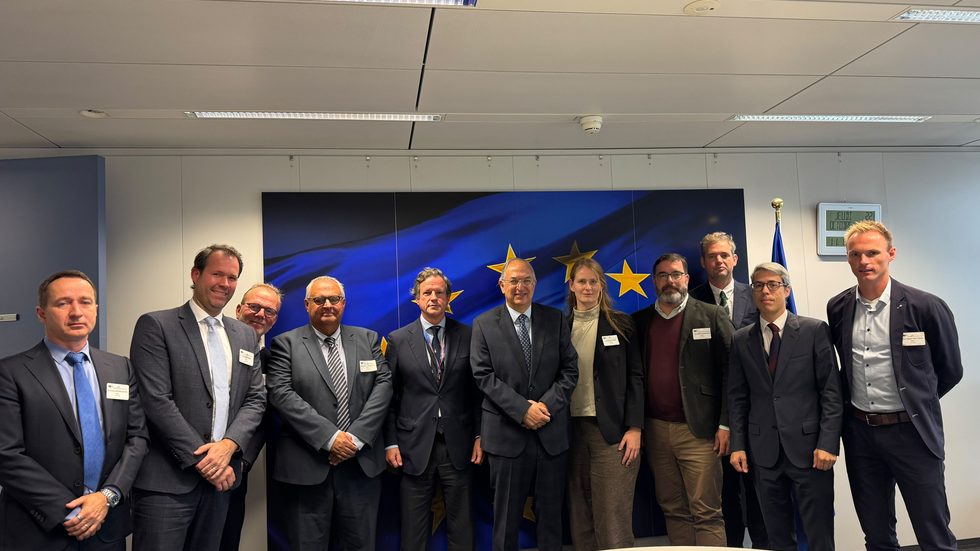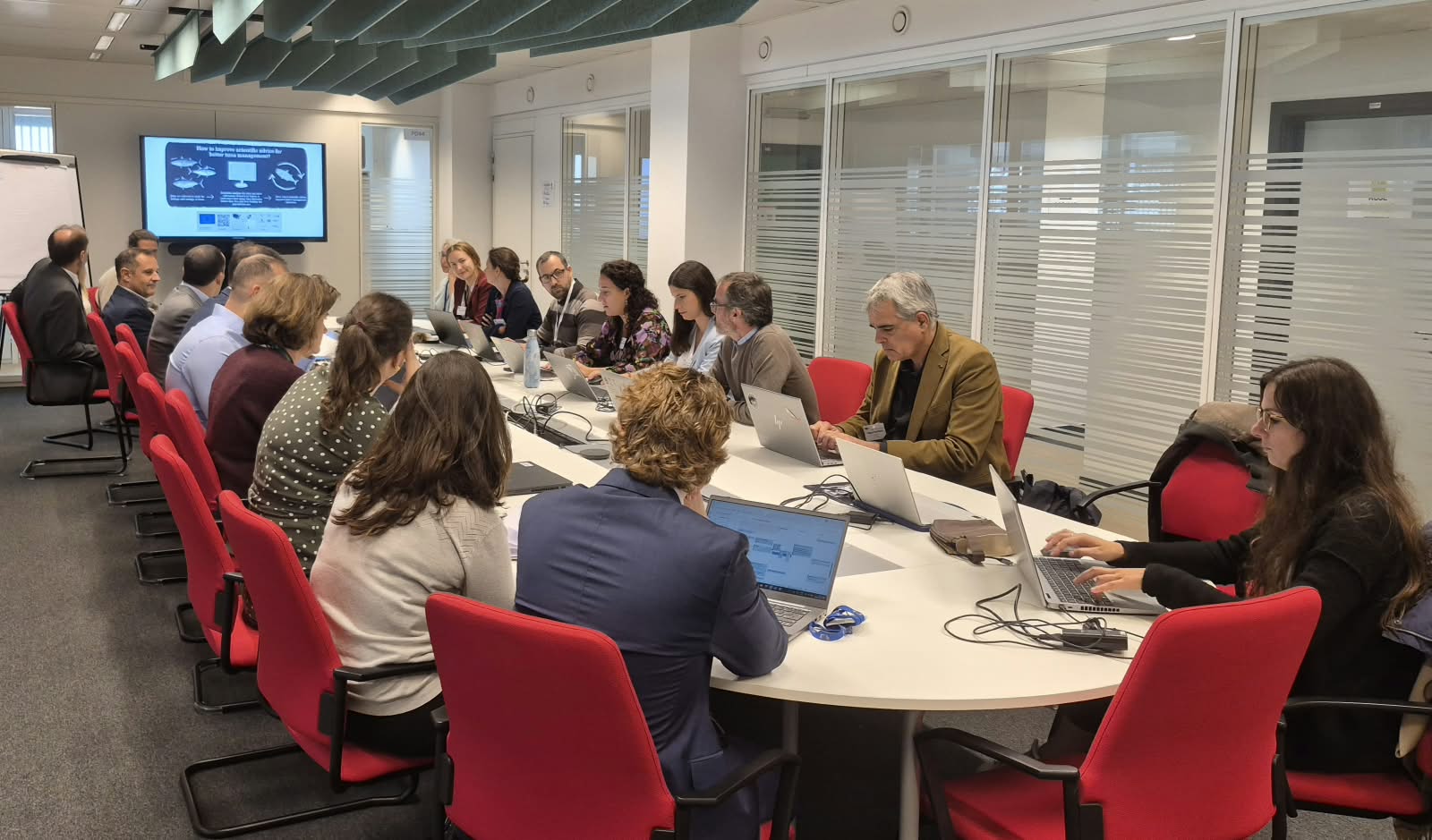
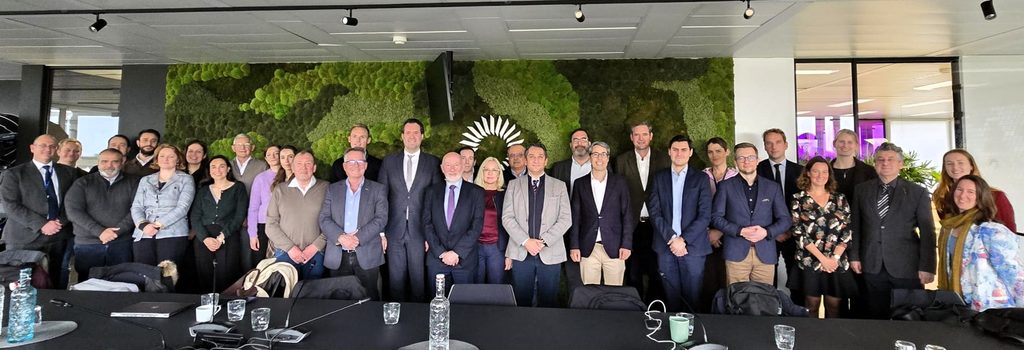
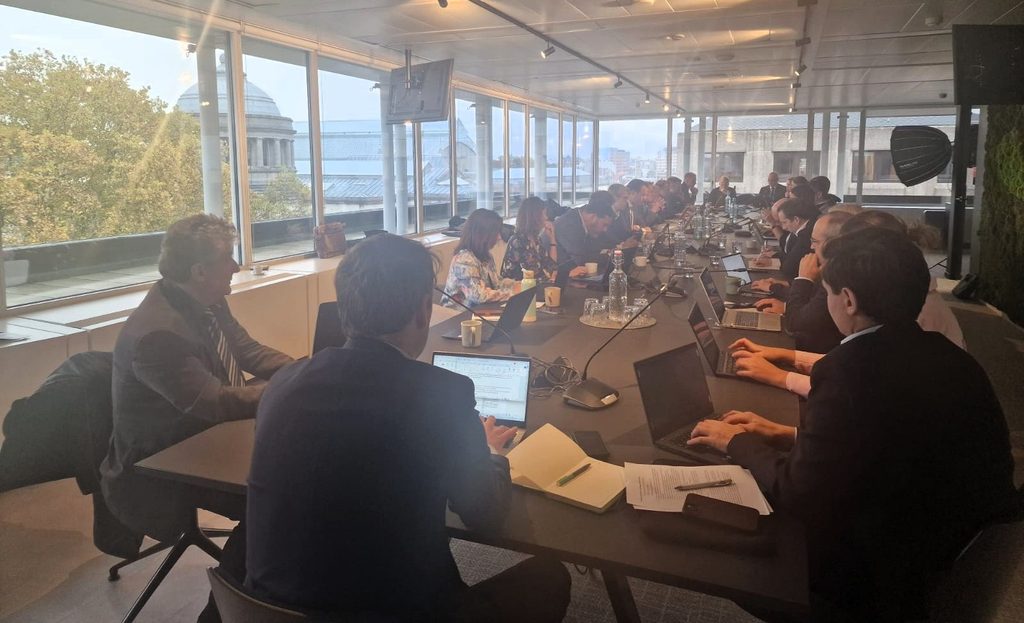
Europêche met yesterday with EU fisheries attachés to discuss the future of EU fisheries policy, including the 2028-2034 budget, 2027 fishing opportunities, trade and regulatory challenges. Europêche urged Member States to help turn repeated evaluations and policy discussions into practical legislative action.
The discussion highlighted that the Commission’s Vision for Fisheries 2040 lacks a clear pathway for delivery, with no defined timelines or concrete outcomes. Participants stressed that legislative work is missing to turn the Vision’s objectives into reality. Yet, despite repeated calls, the Commission’s 2027 Work Programme does not include a revision of the Common Fisheries Policy (CFP). Europêche therefore urged the Council to consider asking the Commission to prepare an impact assessment for a targeted CFP reform.[1]
Tim Heddema, Vice-President of Europêche, said: ‘The current legislative framework has not delivered the results promised to the sector. We were told that compliance with EU rules would allow fisheries to prosper. Despite the best efforts of fishing businesses and governments, that promise has not been fulfilled.’
Europêche welcomed the Council’s negotiating position on the next Multiannual Financial Framework (MFF), including support for fleet modernisation, generational renewal and legal certainty. It also welcomed the Council’s approach to applying the Do No Significant Harm principle through existing fisheries legislation, without duplicative assessments.
Europêche nonetheless called for a mandatory fisheries chapter in national plans and urged the Council to match Parliament’s proposal of €7.29 billion in current prices, compared with the €4 billion currently envisaged by Member States.
On the European Maritime, Fisheries and Aquaculture Fund (EMFAF) 2021-2027 revision, Europêche appreciated the Council’s goal to finalise its position by the end of this year, hoping that the revised standards can be applicable as soon as possible. For the sector it is fundamental to remove barriers to investments in fleet renewal, safety, working conditions and energy efficiency. Europêche also called for simpler access to funding, including fast-track, and support for fishers affected by non-renewal of fisheries agreements with 3rd countries.
For the 2027 fishing opportunities, Europêche praised the Council’s work on the Baltic and pressed for a similarly pragmatic approach in the Atlantic. It urged decision-makers to consider scientific benchmark changes carefully and avoid abrupt quota cuts that could lead to unnecessary closures (e.g., North Sea saithe). Europêche also requested stable and workable fishing opportunities that allows stock recovery while avoiding unnecessary cuts (e.g., cod).
For the Mediterranean, Europêche endorsed the Council’s position on the General Fisheries Commission for the Mediterranean (GFCM). The sector urged that fishing days reflect fishers’ technical measures and gear upgrades, opposed basing effort reductions solely on the most vulnerable stock, and reiterated its call for an annual average of at least 180 fishing days per vessel, in line with the European Parliament’s position.
On the external dimension of the CFP, Europêche advocated simpler rules governing EU external fishing fleet, action to prevent interruptions to fisheries agreements, and the timely transposition of Regional Fisheries Management Organisation (RFMO) decisions into EU law. In this regard, Europêche voiced serious concern over the planning of negotiations on the EU–Mauritania fisheries agreement and the continued lack of solutions. It also stressed that implementing the BBNJ Agreement must be taken as priority and respect the role of RFMOs.
Europêche urged the EU to defend its established fishing rights in negotiations with the UK, Norway and other coastal states. It welcomed the 2027 catch agreements for small-pelagics, but stressed that fair sharing arrangements are still needed. The EU must not reward unilateral overfishing by allowing it to create new quota shares. Europêche also highlighted the outstanding 5,000-tonne cod quota owed by Norway since 2021, the need to restore EU access to Norwegian waters for Atlanto-Scandian herring, and the need to secure EU fishing rights around Svalbard under the Spitsbergen Treaty as reflected in the Vision 2040.
On trade, Europêche applauded the Council’s October 2026 call for greater protection of sensitive fisheries products and calls for it to be translated into concrete measures: strict rules of origin benefiting only EU-flagged vessels, no duty-free access without reduced quotas, and effective import monitoring to enable safeguard measures to be triggered. Only under these conditions can the EU fleet compete fairly with third countries.
On ICCAT, Europêche pushed for the Fish Aggregating Device (FAD) moratorium to be lifted, arguing that it lacks scientific justification when catch limits are in place and is not respected by some non-EU fleets.
Regarding the implementation of the fisheries control regulation, Europêche advocated Remote Electronic Monitoring (REM), such as closed-circuit television systems (CCTV), to be technically feasible, risk-based and adapted to different vessels. It pressed for detailed consultation with vessel operators, equipment manufacturers and maritime safety authorities, recognition of equivalent systems, and full public funding for mandatory equipment. The sector reminded that CCTV will not resolve the structural shortcomings of the Landing Obligation.
[1] Under Article 241 TFEU
ENDS
Press contact:
Daniel Voces, Managing Director of Europêche, +32 489 26 81 07, daniel.voces@europeche.org