Europêche, the representative body for Europe’s fishing sector, welcomes the recent publication of the European Parliament study ‘Labelling of plant-based seafood substitutes – Scope and issues at stake’. The report highlights the rapid growth of plant-based seafood alternatives and the labelling challenges they pose for the EU fisheries sector. It reveals widespread use of misleading marketing strategies and recommends updates to EU labelling laws to ensure consumers receive accurate information. Notably, the report advises banning the use of commercial names for aquatic species on products that do not contain seafood, a step that would effectively prevent consumer deception.
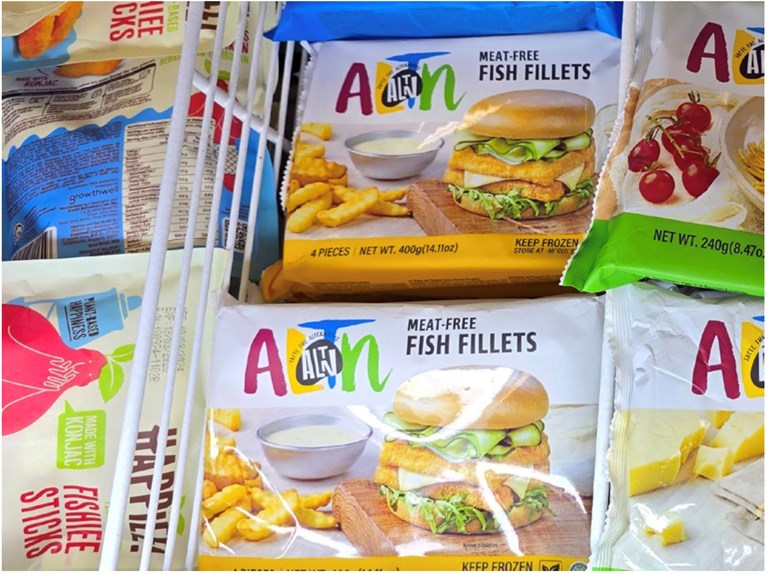
In recent years, plant-based substitutes have made a splash in the food industry, and seafood is no exception. The study rightly shines a light on a growing concern for fishers, retailers, regulators, and above all – consumers: what’s on the label, and is it telling the full story?
‘This is not about plant-based vs seafood,’ said Daniel Voces, Managing Director of Europêche. ‘It’s about truth in advertising. When a consumer picks up a product, they deserve to know exactly what it is, what it contains and how it’s made. This study provides a constructive roadmap to get us there.’
Europêche strongly supports the study’s core recommendation[1]: that food labels must clearly differentiate plant-based substitutes from real seafood, avoiding misleading names and imagery that could confuse shoppers. As it stands, too many products use fish species names, seafood-related terms, and even pictures of genuine fish, all without actually containing any.
The report also highlights that 45% of products analysed use invented names suggesting a link to seafood, with only 13% providing enough information to clarify what the product actually is. Such ambiguity is at odds with the EU’s own Food Information to Consumers (FIC) Regulation[2], which states that food must not mislead, especially when it comes to nature and identity.
Promoting healthy food – the real kind
Europêche agrees with the study’s call to go beyond vague ‘plant-based’ or ‘vegan’ labels, encouraging clear information on main ingredients, country of origin and level of processing. This is particularly vital in a market where the health halo around plant-based can mask the reality. Namely, that many of these products are ultra-processed, high in salt or fat, and contain allergens or imported ingredients.
‘We have no issue with new food products,’ said Voces. ‘Innovation is part of our shared future. However, it’s important to call a spade a spade. European seafood remains one of the most nutritious, sustainable and low-carbon animal proteins available. It is caught by skilled professionals, strictly regulated, and naturally rich in essential nutrients, including real Omega-3, not just added supplements.’
A level playing field
To maintain consumer trust and uphold Europe’s high food standards, Europêche supports the main recommendations of the report and calls on EU policymakers to:
- Amend the FIC Regulation to prohibit the use of fish species names on products that do not contain seafood;
- Enforce stricter labelling rules for plant-based substitutes, ensuring clear ingredient listings and processing information;
- Promote authentic EU seafood through a dedicated Action Plan for Blue Foods.
[1] European Parliament (2025). Labelling of plant-based seafood substitutes – Scope and issues at stake. Study for the Fisheries Committee (PECH). Available online.
[2] Regulation (EU) No 1169/2011 on the provision of food information to consumers (FIC Regulation). Available here.
Press Contact:
Rosalie Tukker, Senior Policy Advisor of Europêche | Email: rosalie.tukker@europeche.org │ Phone: +32 489 26 81 07
Anne-France Mattlet, Deputy Director of Europêche | Email: anne-france.mattlet@europeche.org │ Phone: +33 678 11 63 01