Failed policies such as the landing obligation will remain untouched. The sector warns that the CFP is being undermined by environmental policies.
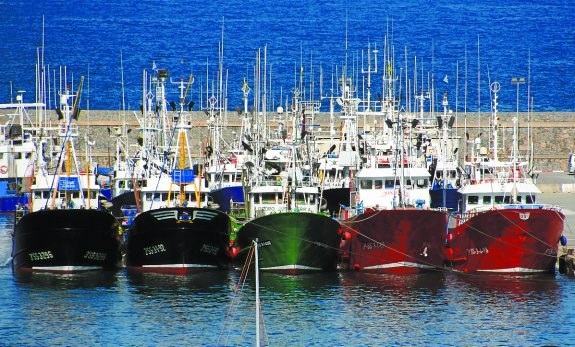
The EU needs to use the right tool for every job. Reformed a decade ago, the Common Fisheries Policy (CFP) has been extremely efficient in rebuilding fish populations. Fish populations have been increasing significantly, with fish stocks reaching in 2018 abundance levels 50% higher than in 2010. Likewise, in 2020, the overall fishing pressure in the North East Atlantic bottomed at a record low. But the CFP is not and cannot be just a tool for fish stocks’ protection. It should be a broader policy encompassing objectives to solve the new geopolitical, climate and governance challenges. The reality is that the current CFP does not mention major societal concerns such as ‘climate change’, ‘Brexit’, ‘Green deal’ or ‘energy crisis’. It does neither address the impacts of the growing number of marine protected areas, the massive expansion of offshore renewable energy sites, food security and energy transition. Not to mention the need to reform ill-conceived policies such as the landing obligation or to address the missing social dimension of the CFP.
Today, the European Commission has unveiled its long-awaited policy package consisting of 4 main documents: an evaluation of the Common Fisheries Policy, an assessment of the common organization of the markets in fishery and aquaculture products, an Action Plan to protect and restore marine ecosystems for sustainable and resilient fisheries and a strategy for the energy transition of EU’s fisheries sector. In its thorough analysis, the Commission attempts to highlight those areas where more needs to be done or where the current situation requires more attention, in order to draw political conclusions and to prepare legislative proposals at a later stage.
Javier Garat, President of Europêche appreciated the effort made by the European Commission in analyzing the performance and effectiveness of the main EU fisheries policies. He stated: “Identifying the gaps and shortfalls of current policy tools is a necessary step to take the right decisions. We celebrate the success of the CFP in delivering sustainable fisheries. However, we are facing rapid changes and global challenges that require to activate the legislative machinery as a matter of urgency. The CFP is 40 years old and the latest reform dates back 10 years. In light of the huge developments of past few years, the priorities and tools of the current CFP are obsolete. It was designed for a scenario preceding the Covid pandemic, the energy crisis, Brexit and the recovery of EU fish stocks. Better implementation of outdated rules is not an option, a revision is a must.”
As regards main fisheries trends, the EU is increasingly dependent on seafood products imported from 3rd countries (70% of total EU-seafood consumption), while reducing its fishing capacity (20% of the fleet or otherwise said 20.000 fishing vessels less than in 2008) and losing access to fishing grounds in third countries. Garat commented: “Before triggering action plans that further reduce EU seafood production, the EU needs to have a strategic vision on future ocean governance and management. It feels like the Commission is putting the cart before the horses. He continued, “We remind the Commissioner of his commitment to keep a balance between the 3 pillars of sustainability, not just the biological dimension, and to address gaps in the social dimension of the CFP. We would have expected strong action to develop fisheries policies in that direction, such as the redefinition of fishing capacity to enable the improvement of working conditions, safety and energy efficiency.”
Europêche regrets the fact that, while showing no intention of reforming the CFP, the Commission is undermining this primary fisheries legislation by proposing secondary environmental legislation (e.g., the nature restoration law) and political action plans that have a huge impact on the activity governed by the CFP basic regulation. Garat concluded: “In fishing we have reached a point where protection is synonymous with exclusion. We must try to make environmental protection compatible with human activity and in particular with the much-needed production of (sea)food. Trying to convert our seas in marine sanctuaries would cost the world far more in deforestation and biodiversity loss than by fishing. Seafood is the healthiest and most environmentally friendly source of protein on earth. For that reason, Europêche fully subscribes the criticism as formulated by the European Bottom Fisheries Alliance (EBFA) regarding the objective to phase out bottom contacting gears, under the upcoming action plan”.
Press contacts:
Daniel Voces, Managing Director of Europêche: +32 2 230 48 48 daniel.voces@europeche.org