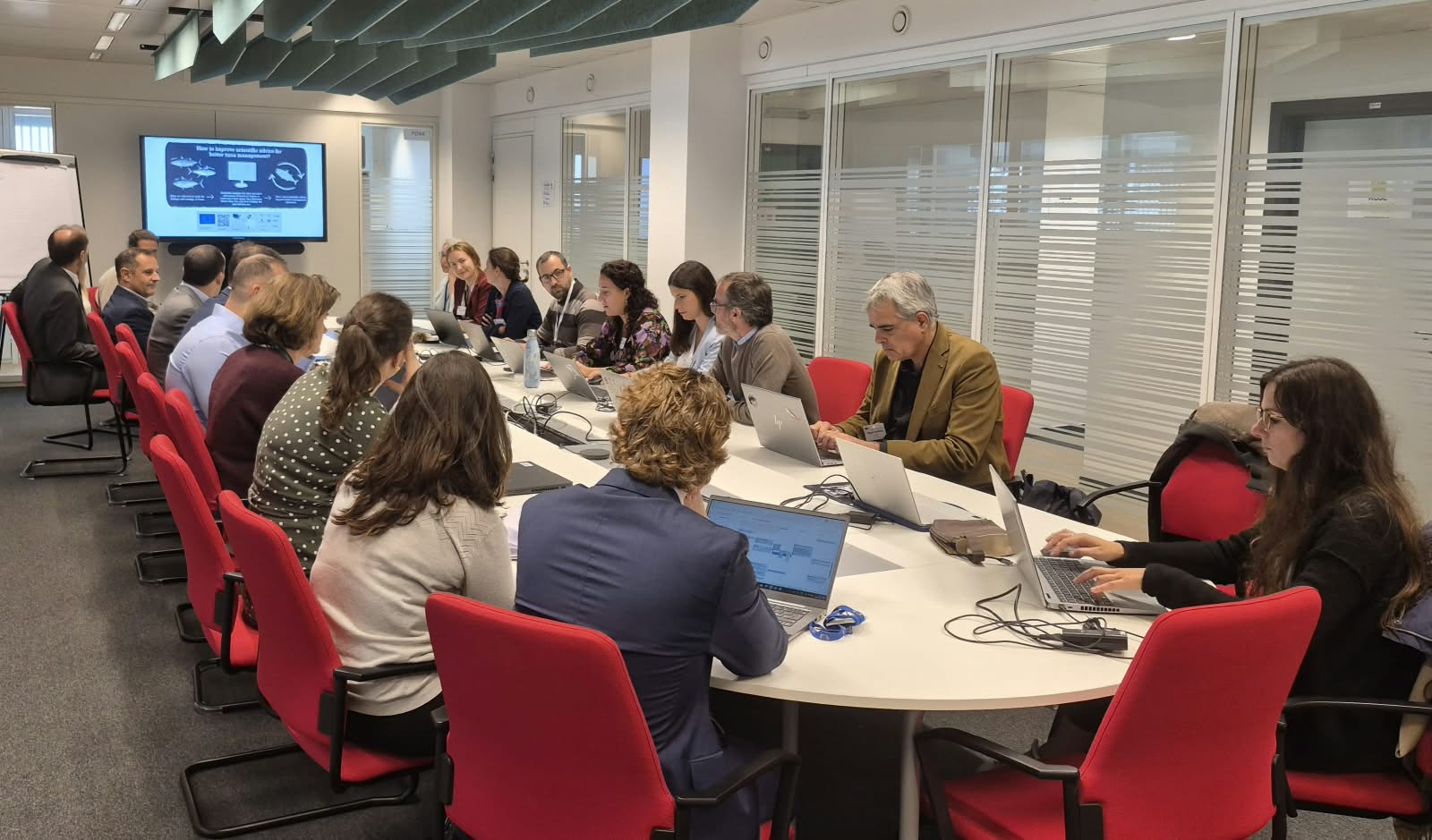
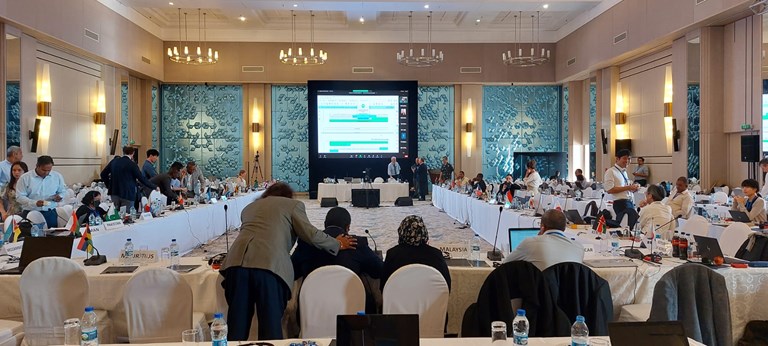
IOTC, which 27th session took place in Mauritius from May 8th to 12th, adopted by consensus 9 resolutions, notably on bigeye tuna, electronic monitoring system and cetaceans. The adoption of catch reductions for bigeye as requested by the Scientific Committee of the IOTC proves once again that Regional Fisheries Management Organisations (RFMOs) can apply modern harvest strategies for tropical tuna species based on the best science. The adoption of guidelines for electronic monitoring systems should also ensure a progressive improvement of the observer coverage, very low at the moment in IOTC.
Following last year’s adoption of a global catch limit for bigeye tuna, IOTC, driven by EU and Japan, adopted individual catch limits as well as catch reductions for the biggest harvesters. Anne-France Mattlet, director of Europêche Tuna Group, fully endorses this decision: “Adopting catch limits for bigeye is paramount to ensure the fishery’s sustainability. We only hope that small-scale operators, who have been given the possibility to harvest up to 2 000 tons annually in the next two years, will also play the game and not go beyond without asking to redistribute the TAC, as it was the case for yellowfin tuna”.
The European multi-specie proposal on tropical tuna, however, was rejected and no compromise could be found on yellowfin tuna, that would have brought objectors to the measure onboard. Mattlet stated: “We regret the total unwillingness of several States to adopt catch limits for yellowfin and skipjack at levels that allow their sustainable exploitation. The European Union’s multi-species proposal made it possible to achieve this while ensuring more favorable conditions for developing coastal states but was met with strong opposition earlier this week. How is it possible that most parties, including developing coastal states which would come out on top, have not even considered it?”.
Regarding Fishing Aggregated Devices (FADs), a working group was created at the initiative of Korea, to study the impacts and possible new management measures based on science.
An important step was also taken for data accuracy: the IOTC adopted guidelines for electronic monitoring systems (EMS). Fleets will now be allowed to complete human on-board observers with EMS, including for small-scale vessels. Xavier Leduc, president of Europêche Tuna Group, concluded: “At last, EMS guidelines are adopted, so all fleets will be able to increase their observer coverage. Right now, only the European purse seine fleet apply voluntarily 100% observer coverage. Other fleets, including industrial Asian longliners, barely reach the 5% compulsory coverage.”.
However, there is still a long way to go to increase viability and quality of the data. The Seychellean proposals to improve catch reporting and statistics, including on FADs, has been rejected by developing coastal states and Japan. The latter also pushed back the Maldivian proposal on sharks, which would have definitely banned shark finning in this important ocean. Europêche notes with great disappointment this new objection to a measure aiming at protecting sharks and remind that shark fining has been forbidden in EU since 2013. The European proposal on a mechanism for boarding and inspection was also rejected by China.
Press contacts:
Daniel Voces, Managing Director of Europêche: +32 2 230 48 48 daniel.voces@europeche.org
Anne-France Mattlet, Europêche Tuna Group Director: anne-france.mattlet@europeche.org