Last week’s NEAFC Annual Meeting again showed that decision-making in Northeast Atlantic fisheries management has become deeply flawed and needs urgent review. Instead of trying to improve management of pelagic stocks and engaging in good faith, parties cold-shouldered each other and appeared to enter into (geo)political games. Proceedings also showed the Russian Federation re-emerging as a pivotal player, openly supported by some of the other delegations.

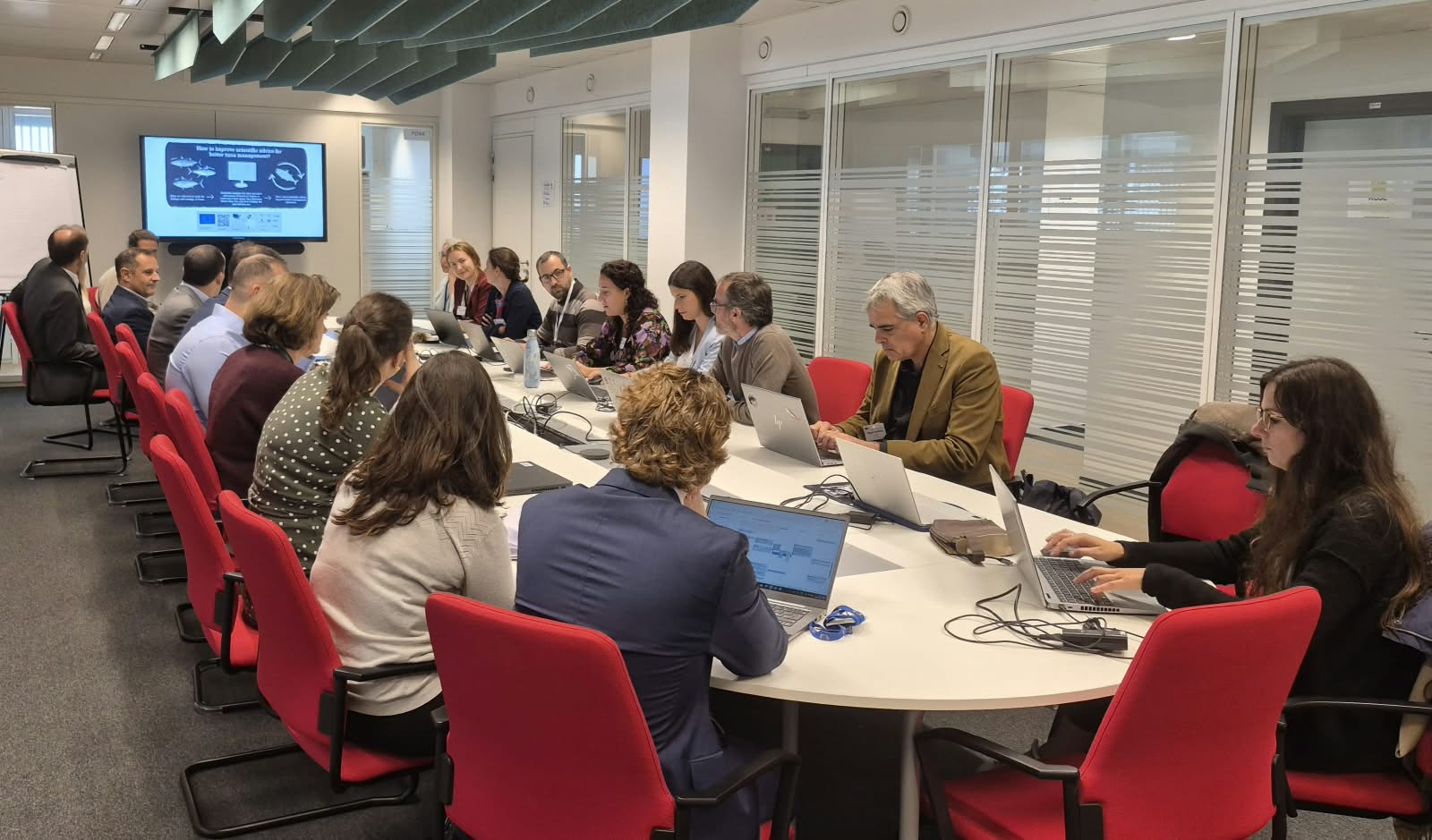
At the Annual Meeting of the North East Atlantic Fisheries Commission in London (11-14 November), the EU, the UK, Norway, Faroe Islands, Greenland and the Russian Federation gathered to discuss management measures for various stocks, including setting the 2026 Total Allowable Catch (TAC) for mackerel, blue whiting and Atlanto-Scandian herring. But rather than delivering on much-needed stability and sustainability, parties became stuck in their respective trenches. This means still no TACs for mackerel and blue whiting, no tighter rules against transhipment and no certainty about submission of Russian catch data (which is crucial for the provision of robust scientific advice). The inability of NEAFC as a body to promote good cooperation and sound, unbiased decision-making contrasts heavily with recent performance of other Regional Fisheries Management Organisations (RFMOs), such as NAFO (North Atlantic) and SPRFMO (South Pacific) and IOTC (Indian Ocean). Sadly, it is also a continuation of failed and contentious bilateral, trilateral and multilateral consultations in the Northeast Atlantic, lacking cohesion. This situation calls for urgent evaluation and independent intervention.
It is very concerning to the EU industry that the EU became largely isolated at the NEAFC Annual Meeting. Discussions frequently went against sensible and responsible approaches to management, and catered instead to Russian interests. There really is no good reason why this week did not bring about a blue whiting TAC, which was already pre-conceived at the October Coastal States consultations, or progress on a comprehensive mackerel management package including a TAC, a sharing arrangement and supporting measures such as limiting catches in international waters. The industry requires clarity on the TACs fast, for the sake of its fishing plans for a year in which each part of the fleet will struggle with huge quota cuts.
The EU industry was extremely disheartened to learn that discussions on mackerel are ongoing without active participation of the EU and the current chair of these consultations. As talks are entering a decisive phase, at a critical moment for the mackerel stock, the industry urges all Coastal States to engage constructively and creatively. Parties need to work on rebuilding relationships and to focus on the grand prize, which should be the same for everyone: a healthy mackerel stock that allows each party to capitalise on its fair economic interests and track records and that continues to contribute to food security in many places in the world. This can only be achieved with a comprehensive approach, with the support of all involved. The EU industry calls on the chair of the mackerel consultations to facilitate such a process without delay, and to organise higher political involvement if needed.
The EU industry remains committed to responsible mackerel fishery. The EU is the only Coastal State that has not departed from the most recent quota sharing arrangement. Others have set excessive unilateral quotas, swapped in part of those inflated quotas or entered into partial agreements cementing these illegitimate track records, thereby all contributing to systematic overfishing. Lack of agreement has also perpetuated indeterminate overfishing by Russia.
As a result, the mackerel stock, however resilient it has shown itself to be, has fallen to a critical level. If the scientific advice is not followed in 2026, a zero-catch advice for 2027 could become reality. As the EU industry already pointed out in 2023, ‘hindcast’ research shows that were it not for the overshoot throughout the years, managers would now be able to increase the TAC. Catches in the past 10 years could have been up to 30% higher on average. To counter current irresponsible practices in the absence of a new sharing arrangement, the EU should now apply targeted trade measures based on the revised Regulation 1026/2012[1].
Tim Heddema, spokesperson for the EU pelagic fishing industry, comments: “Fisheries management in the Northeast Atlantic is at a crossroads. Do we keep fighting small battles – with sometimes huge consequences – on several different battlegrounds? Will parties stay entrenched in positions that only they feel are justified? Neither fish stocks nor fleets, certainly not the EU’s, have benefited from current practices, which have also been fraught with geopolitical tensions. It seems the time has come to take a fresh look at the entirety of our relations and interests and on how a management body like NEAFC can support our cooperation. As an industry, we are ready to play our part as always. In the meantime, all efforts should be undertaken to set a mackerel TAC for 2026 and reach agreement on a comprehensive management package for this key stock.”
[1] EU Regulation on certain measures for the purpose of the conservation of fish stocks in relation to countries allowing non-sustainable fishing
Contact:
Tim Heddema, Chair of the EAPO Northern Pelagic Working Group and Vice-President of Europêche
+31625045602 / theddema@pelagicfish.eu