Starting on September 29, the European Commission will kick off a new round of negotiations on the draft free trade agreement (FTA) between the European Union and Thailand. According to the European Commission, tuna production is one of Thailand’s priorities on the Free Trade Agreement negotiations with the EU (Meeting of the Working Group 2 of the Advisory Council, 18 September 2025). The United States’ decision to increase tariffs for Thailand will likely increase this interest for the European market. Europêche, the leading representative body for the fishing industry in Europe, calls for the exclusion of tuna products from this agreement.
A risk of destabilization of the European tuna market, enhanced by the recent increase of US tariff
With nearly 450 000 tons of canned tuna, Thailand is the world’s leading producer and exporter of canned and preserved tuna, accounting for over 22% of global production and more than 29% of global exports. Between 2020 and 2023, the EU imported nearly 40,000 tons of fishery products from Thailand annually—despite current tariffs of 24% on tuna loins and canned tuna. Even without tariff preferences, Thailand remains one of the top suppliers to the EU market. In addition, the additional duties recently imposed by the United States to Thailand increases even more the need for Thailand to access the EU market duty free as well as the risk for EU tuna producers to face an aggressive competition.
Granting duty-free access to Thai tuna products would severely impact the competitiveness of the EU tuna industry.
A European model threatened by unfair competition
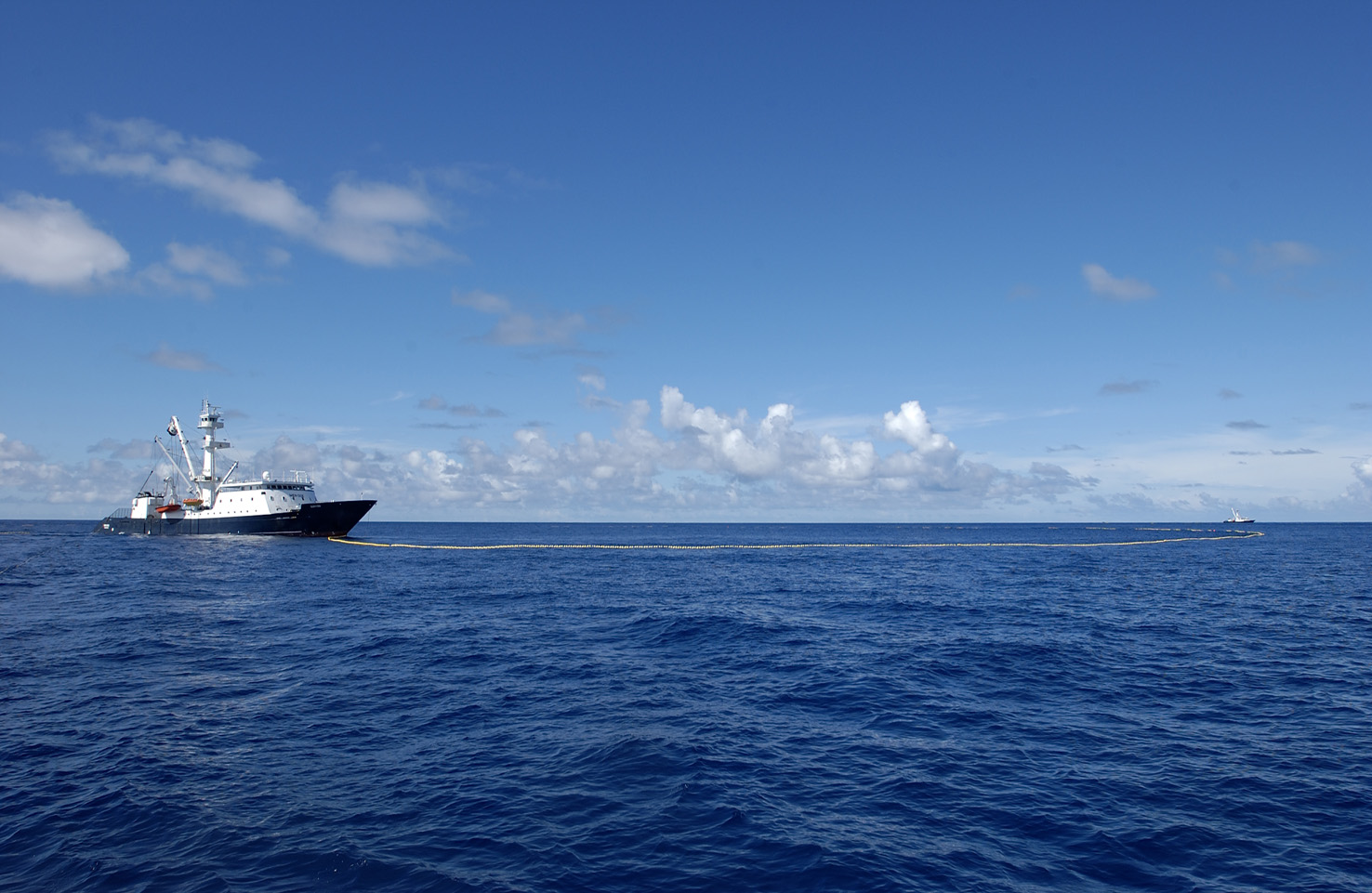
In the ultra-competitive global tuna market, the European tuna purse seiner fleet is recognised as a model of sustainability and responsibility. The fleet respects strict quotas, is monitored 24/7 by VMS, systematically embarks scientific observers meaning 100% observer coverage and applies stringent control, monitoring and control regulation. Besides, the fleet’s environmental and social standards are also certified by MSC label, complying with the ILO C188 requirements verified by the flag state, as well as AENOR (APR) and AFNOR standards. Those rules and standards require a high level of investment and make it the most expensive tuna fleet to run in the world. EU vessels have to compete in international waters and markets with non-EU fleets that do not respect the same standards, or even engage in IUU (illegal, unreported and unregulated) fishing.
The EU tuna sector supports over 25,000 direct jobs across the EU, particularly in regions highly dependent on fishing. These jobs and investments would be put at risk by tariff liberalisation to Thai tuna products. In addition, this would undermine the EU supply chains established with West and East African partners under the Economic Partnership Agreements, including Côte d’Ivoire, Seychelles, and Mauritius.
The threat of low-quality and standards tuna products entering EU supermarkets
Thailand, has worrying structural shortcomings:
- Its processing industry imports whole tuna massively from countries with opaque practices in terms of sustainability and sanitary compliance (including Taiwan, China, South Korea and Indonesia)
- Despite that Thailand has ratified International Labour Organisation’s Convention 188, it has failed to implement it and ratify other major international conventions on human rights and work at sea (ILO C87 on Freedom of Association and Protection of the Right to Organise and ILO C98 on the Right to Organise and Collective Bargaining).
- The European Commission’s latest audit in 2023 highlighted persistent flaws in health and food safety from Thailand, revealing its inability to ensure standards that comply with European requirements.
The EU and its contradictions: a call for common sense
European fisheries are coming up against the EU’s paradoxes: while the European Union continues to impose increasingly restrictive regulations on its own companies, it simultaneously allows the import of products that do not meet these same standards.
Faced with this observation, Europêche calls on the European Union to exclude tuna products from the draft free trade agreement with Thailand and maintain a strict rules of origin. This will help preserve the European tuna sector and guarantee a level playing field for EU producers. If that is not possible, as in other FTAs, it would be mandatory to apply strict rules of origin: only for wholly obtained fish, and with no cumulation.
Xavier Leduc, President of Europêche Tuna Group, explains: “Tuna loins and cans processed in Thailand from low-standard Asian fisheries pose a direct threat to sustainable European fleets, which face higher costs due to their rigorous control, social, and environmental standards. A Free Trade Agreement with Thailand allowing duty-free tuna products into the EU would only deepen the existing imbalance, further disadvantaging European fleets and undermining fair competition.”
Anne-France Mattlet, Director of Europêche Tuna Group, says: “Under current regulations, the EU cannot block low-standard tuna entering EU market—but it must not let it in duty-free.”
Press contact:
Anne-France Mattlet, Europêche Tuna Group Director | phone: +33 678 11 63 01 | e-mail: anne-france.mattlet@europeche.org