Europêche, the leading representative body of the European fishing sector, welcomes the publication of a new peer-reviewed scientific study examining one of the most persistent assumptions in fisheries policy and public debate: that small-scale fisheries are inherently more sustainable than larger-scale operations. The research1 emphasize that there is no scientific evidence supporting such a generalisation. Instead, the authors demonstrate that “large and small can be beautiful in fisheries”, is it not a matter of size, it is a matter of appropriate management.
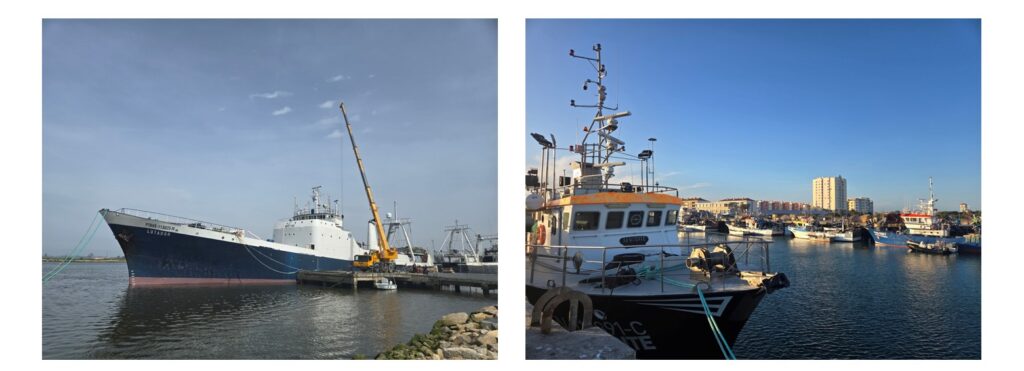
Reviewing three decades of scientific literature, the paper finds that both small and large-scale fisheries can contribute positively to sustainable seafood production when supported by sound management frameworks. Likewise, poor environmental and socio-economic outcomes can occur at any scale when governance is weak. The authors caution against policy approaches that begin with preconceived preferences for one fleet segment over another, as these risk overlooking effective solutions and creating unintended consequences.
For Europêche, the study provides timely scientific evidence in support of a balanced and evidence-based approach to fisheries management. “This paper confirms what the fishing sector has consistently argued: sustainability is determined by how fisheries are managed, not by the size of the vessel,” said Javier Garat, President of Europêche. “European fisheries are among the best regulated in the world, with strict catch limits, technical measures, control systems and scientific advice applying across fleet segments. Policymakers should therefore avoid simplistic narratives that favour one type of fishing over another without scientific justification.“
The findings are particularly relevant as the European Union discusses the future of the Common Fisheries Policy (CFP), the Ocean Act and the Marine Strategy Framework Directive. Europêche stresses that future policies should remain fleet-neutral, focusing instead on measurable environmental performance, compliance with scientific advice and socio-economic outcomes.
The study also highlights that different fleet segments fulfil complementary roles within seafood supply chains and coastal communities. Larger vessels often provide economies of scale, year-round food security and efficient harvesting of offshore resources, while smaller vessels play an important role in local employment, cultural heritage and supplying niche markets. Both contribute to the resilience of Europe’s fisheries sector when operating under robust governance systems.
Europêche believes that public policy should recognise this diversity rather than promote artificial distinctions between fleet segments. Measures that discriminate against larger vessels or certain fishing methods solely on the basis of size undermines the competitiveness of Europe’s seafood sector without delivering environmental benefits.
“Europe needs fisheries policies based on science rather than perceptions,” added Mr Garat. “Healthy fish stocks, thriving coastal communities and competitive seafood production require effective governance, innovation and responsible fisheries management across all fleet segments. This study is an important reminder that sustainability cannot be reduced to vessel size.“
Ends
Press contacts:
Margot Angibaud, Europêche Senior Policy Advisor +32 494 19 03 96 margot.angibaud@europeche.org
Press Release – Large and small are beautiful, it is a matter of appropriate management